
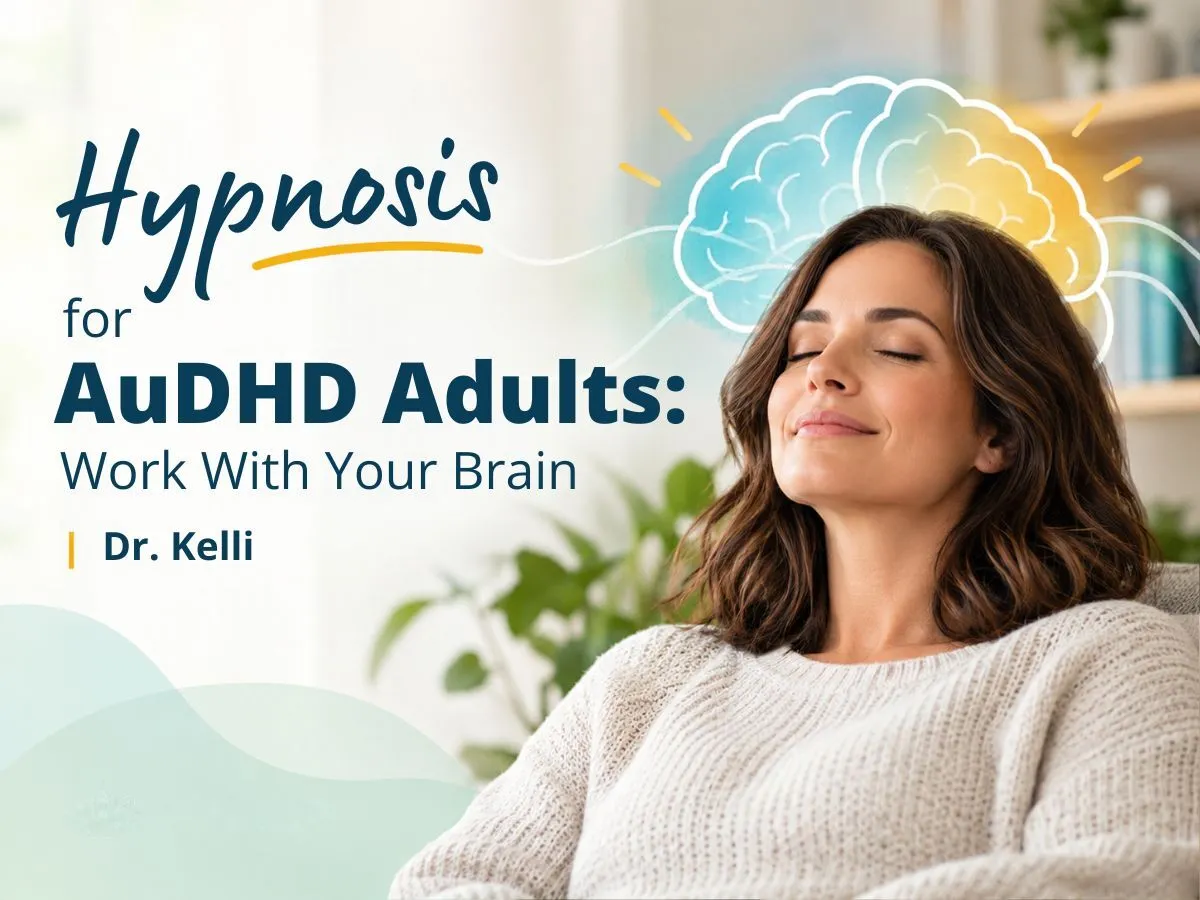
Hypnosis for AuDHD: Work with Your Brain, Not Against It
If you're AuDHD, you may have spent a lifetime wondering:
"Why am I different?"
I know that was what I always thought about myself. I felt like an alien on this planet, and the masking and trying to keep up with what other non-neurodivergent people were doing drained me, and I had full-on burnout, which then triggered a chronic illness.
What Living With AuDHD Can Feel Like
You can hyperfocus for hours on something that interests you, but struggle to start a simple task.
You can crave stimulation while becoming completely overwhelmed by noise, people, or too much information.
You may need structure, but hate feeling restricted by it.
And when all of that collides, you can end up exhausted, overwhelmed, and wondering what the hell is wrong with you.
Nothing is wrong with you.
Your brain simply works differently. I prefer to use the analogy of different processing systems like computers have.
And you are far from alone. According to Cleveland Clinic, studies estimate that 50% to 70% of autistic people also have ADHD, which is where the term AuDHD comes from.
And hypnosis isn't about changing that or who you are!
It's about learning to work with your brain instead of constantly fighting it.
It is about turning your inner critic into your inner coach!
So How Can Hypnosis Help?
Clinical hypnosis can be a powerful tool for working with the unconscious mind and creating new patterns around things like:
Stress and overwhelm
Anxiety
Sleep
Focus and task initiation
Emotional regulation
Self-confidence
Habits and behaviors
Sensory overload
Negative self-talk
And for AuDHD adults, that last one can be huge.
Why Negative Self-Talk Hits So Hard
Because after years of hearing:
"You're too sensitive."
"You're not trying hard enough."
"You're so inconsistent."
"Why can't you just focus?"
...it's easy to start believing that something is wrong with you.
There isn't.
You don't need to become less sensitive.
You don't need to become more "normal." Because, hey, normal is just a setting on the old school dryers.
And you certainly don't need to spend the rest of your life fighting your own brain.
Better Tools for Being YOU
Hypnosis can give you another way to approach the patterns that aren't serving you.
Not by "fixing" your autism or ADHD.
By giving you better tools for being YOU.
That's the real goal.
Work with your brain.
Work with your body.
Work with your unconscious mind.
Because change is a lot sweeter when you stop fighting yourself.
Frequently Asked Questions
What is AuDHD?
AuDHD is an informal term for having both autism and ADHD. It is not a separate diagnosis in the DSM-5, so a person receives separate autism and ADHD diagnoses, but the two conditions overlap often. Studies estimate that 50% to 70% of autistic people also have ADHD, and living with both can feel like a tug-of-war, such as craving new experiences while also needing a reliable routine.
Can hypnosis help with AuDHD?
Hypnosis is not a treatment for autism or ADHD, and it does not change who you are. It can be a supportive tool for challenges that often come with AuDHD, such as stress and overwhelm, anxiety, sleep, emotional regulation, sensory overload, and negative self-talk, by working with the unconscious patterns behind them. Research specifically on hypnosis for AuDHD is limited, so it works best alongside, not instead of, the care of your healthcare team.
Will hypnosis replace my ADHD medication, therapy, or other support?
No. Hypnosis is an adjunct, not a replacement. There is no single treatment for AuDHD, and care is usually tailored to the person. Never start, stop, or change a medication because of hypnosis. Talk with your prescriber about any changes.
Is hypnosis safe for neurodivergent adults?
Hypnosis is generally considered safe when practiced by a trained professional, and you stay aware and in control throughout. A good practitioner will explain what to expect, go at your pace, and adapt to how your brain works, including your sensory comfort. If you have a history of serious mental health conditions or you are unsure whether hypnosis is right for you, check with your healthcare provider first.
Why is negative self-talk so common for AuDHD adults, and can hypnosis help?
Many AuDHD adults spend years hearing messages like "you're too sensitive," "you're not trying hard enough," or "why can't you just focus." Over time, those messages can turn into an inner critic. Hypnosis works with the unconscious mind to build new patterns around that self-talk, with the goal of turning the inner critic into an inner coach, without trying to make you less sensitive or more "normal."
How do I get started with hypnosis for AuDHD?
A good first step is a free session, where you can talk through what you're experiencing, ask questions, and see whether hypnosis feels like the right fit. Sessions are offered virtually, so you can begin from the comfort of home.
Ready to Work With Your Brain?
If your nervous system has been stuck in survival mode, you don't have to figure it out alone. I'd love to talk with you about whether hypnosis is a good fit. Schedule a free session and let's start there.
If you'd like to explore at your own pace first, take a look at the Sacred Nervous System Reset, an online group program for sensitive people healing from burnout and complex stress, or the Anxiety Detox course.
This post is for educational purposes only and is not a substitute for care from your healthcare team. Read the full disclaimer.


